
Your Backyard Isn’t as Harmless as You Think What We’re Putting Into Our Environment… and Who Pays the Price.
, by Majella Gee, 20 min reading time
, by Majella Gee, 20 min reading time
A powerful, eye-opening guide to how everyday household and garden chemicals impact wildlife and the environment. Learn how toxins affect birds, bees, aquatic life, and ecosystems around your home.
Take a look outside for a moment…
Your garden. Your lawn. Your backyard.
It probably looks peaceful. Safe. Even inviting.
Maybe you’ve got birds visiting. Bees moving through the flowers.
A frog or two after rain. The occasional lizard darting past.
It feels like nature.
But here’s the uncomfortable truth—
What we’re putting into these spaces is quietly changing everything.

Wildlife lives in our world now
There’s no clear line anymore between “their environment” and “ours.”
They drink from our bird baths.
They walk across our lawns.
They forage in our gardens.
They raise their young in our trees and rooflines.
So when we use chemicals in these spaces…
We’re not just targeting pests.
We’re exposing everything.
It doesn’t stop where you put it
This is where most people underestimate the impact.
A small amount here… a quick spray there…
But toxins don’t stay put.
They move.
Through the soil.
Through the air.
Into water.
And up the food chain.
And once they’re in the system…
They don’t just disappear.

The things we use every day
Let’s talk about what’s actually going on in a typical backyard.
Snail bait. Pest sprays. Fertilisers. Treated soils.
Some of these are incredibly toxic—not just to what you’re trying to get rid of, but to anything that comes into contact with them.
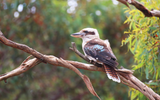
Snail bait, for example, doesn’t just sit there waiting for snails. Birds, lizards, and small mammals can ingest it directly. And then there’s what’s called secondary poisoning—a kookaburra eats a poisoned rodent, and now it’s affected too.
Now, to be fair, there are some newer baits designed to reduce this risk, where secondary poisoning is less likely. But that doesn’t make them harmless. It just means we need to understand exactly what we’re using, rather than assuming it’s safe.
Because not everything on the shelf is equal.
And not everything sold is truly safe for the environment—some chemicals banned in other countries are still available here in Australia.
Plant choices matter more than people realise
This one is often overlooked.
We go to a nursery, pick what looks nice, maybe what’s on special, and plant it.
But have you ever asked—
Is this safe for wildlife?
Is it native?
Does it provide food or shelter?
Could it actually be harmful?
A quick conversation with your local nursery can make a big difference.
And wherever possible, lean towards native plants. They’re adapted to the environment, support local species, and help maintain balance.
Because once something goes into your garden, it becomes part of the ecosystem around you.
And that ecosystem is relying on you to get it right.

Water – where it all ends up
If you’ve got water on your property, this matters even more.
A bird bath. A pond. A fish pond. A dam. Even runoff heading toward a creek.
Everything eventually ends up there.
You spray your garden. It settles. It rains. It washes through the soil.
And that water—what looks clean to you—isn’t clean at all.
Wildlife drinks it anyway.
Birds. Frogs. Insects. Small mammals.
They don’t have the option to question it.

And what happens next?
Frogs absorb toxins straight through their skin.
Fish are exposed constantly in that environment.
Birds ingest contaminants every time they drink.
And slowly… things start to change.
What you spray doesn’t stay
Fly sprays. Ant treatments. Cockroach baits. Insect growth regulators.
We use them to control pests—but we rarely think about what else they’re doing.
Because those insects?
They’re food.
For birds. For reptiles. For amphibians.
And when you remove or contaminate that food source, you’re not just solving a problem—you’re creating a bigger one.
Some of these chemicals don’t just kill. They interfere.
They disrupt breeding cycles.
They affect fertility.
They impact the ability of species to reproduce and recover.
So even if you don’t see an immediate effect…
It’s happening.

What leaves your property… doesn’t stop there
This is where it gets bigger than just your backyard.
When you wash down your driveway…
clean outdoor areas…
or rain moves through treated spaces…
Those chemicals don’t just disappear.
They travel.
And along the way, they affect everything they touch.
Aquatic life doesn’t get a buffer.
Fish, insects, and microorganisms are exposed constantly—
not once, but over and over again.
The bigger picture
And this is where we need to zoom out.
Because it’s not just about one bird, one frog, or one backyard.
Across thousands of homes, using the same products, the same way—
we start to see real impact:
And this is how bigger problems begin.
Not all at once.
Not dramatically.
Just slowly… quietly… over time.

The part we don’t always connect
It’s easy to think—
“It’s only a small amount.”
“It’s just my yard.”
“It won’t make a difference.”
But it does.
Because wildlife doesn’t stay in one place.
It moves through all of it.
And every small action becomes part of something much bigger.
So what now?
Don’t panic. And don’t switch off.
Just start noticing.
What you’re using. Where it ends up. What it might affect beyond what you can see.
You don’t have to change everything overnight—but you can start making better choices as you go.
Ask questions. Choose safer options. Think about the flow-on effect.
Because unlike us…
Wildlife doesn’t get a say in any of this.

Final thought
We often think we’re caring for our space…
But in reality, we’re shaping a shared environment.
One that wildlife depends on—whether we realise it or not.
And sometimes, all it takes is a shift in awareness…
to start doing things a little differently.
© Majella Gee | March 2026
#WildlifeMatters #ProtectOurWildlife #EcoAwareness #GardenResponsibly #SustainableLiving #EnvironmentalImpact #BackyardWildlife #NatureCare #ToxinFreeLiving #ProtectNature