
When Humans Refuse to Learn, Wildlife Pays the Price
, by Majella Gee, 17 min reading time
, by Majella Gee, 17 min reading time
Before anything else, this must be said clearly and respectfully:
a young woman has lost her life, and that is a tragedy.
Nineteen-year-old Canadian backpacker Piper James was found dead on K’gari, and my sincere sympathy goes to her family and friends, who are now navigating unimaginable grief. No discussion about wildlife, conservation, or policy should ever dismiss or minimise that loss.
What makes this situation even more confronting is that Piper’s parents have publicly stated they do not support the killing of dingoes, saying this is not what their daughter would have wanted. That alone should have forced a pause — a moment for reflection, evidence, and responsibility.
Instead, once again, we are watching wildlife pay the price for human failure.

Knee-Jerk Killing Isn’t Protection — It’s Optics
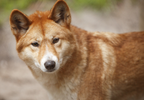
The decision to euthanise dingoes on K’gari is being framed as “public safety”.
It isn’t.
Killing animals after a tragedy does not undo what has happened. It does not make future visitors safer. It does not address the real causes of risk. It simply creates the illusion of action, while avoiding the uncomfortable truth that this situation was shaped by human behaviour in a wild ecosystem.
Dingoes are not villains.
They are apex predators doing exactly what apex predators do — hunting, defending territory, behaving instinctively.
That is not malice.
That is ecology.
If humans cannot follow rules, respect distance, stop feeding wildlife, and stop treating wild places like controlled environments, then wildlife should not be punished for existing.

We Keep Repeating the Same Mistake — Everywhere
This pattern is depressingly familiar.
Crocodiles are destroyed for being seen near boat ramps — as though they understand human zoning.
Sharks are hunted after attacks, despite overwhelming evidence that culling does not improve ocean safety.
Snakes are killed out of fear, even though they play a vital role in pest control and ecosystem balance.
Now dingoes are facing the same fate.
This is not conservation.
It is scapegoating.
Wild animals are not breaking rules — humans are inventing them.

Real Conservation Protects — It Doesn’t Punish
Let’s talk science, not slogans.
When apex predators are protected instead of attacked, ecosystems don’t collapse — they recover. This isn’t a fringe idea. It’s been observed, measured, and documented across the world.
One of the clearest examples comes from Yellowstone National Park, where wolves were reintroduced after decades of eradication. What followed was not just the return of a single species, but a profound ecological reset known as a trophic cascade.
Wolves didn’t simply reduce elk numbers — they changed elk behaviour. Grazing pressure eased along riverbanks, allowing native vegetation to regenerate. As willows and aspens recovered, so did the species that depended on them. Beaver populations increased and rebuilt dams, stabilising waterways and improving habitat for fish, birds, insects, amphibians, and countless other organisms.
One of the most striking findings was a dramatic increase in willow crown volume — the size and health of the tree’s leafy canopy — which in some areas grew by up to 1,500% over time. That isn’t cosmetic. It’s a measurable sign of ecosystem repair.
This matters because it proves a fundamental truth:
Apex predators are not problems to be removed — they are systems to be respected.
They regulate prey populations, influence movement and behaviour, suppress overpopulation, and shape landscapes in ways humans simply cannot replicate with guns, poison, or policy.
Remove them, and the damage ripples outward.

Why This Matters in Australia — and Why It Matters for Dingoes
Australia has its own apex predators, and dingoes are among the most important.
On K’gari, the dingo population is small, isolated, and genetically vulnerable. This is not a vast mainland system with endless replenishment. Every individual matters. Removing animals from a closed population risks destabilising social structures, altering behaviour, and increasing — not decreasing — conflict.
Just as wolves influence elk behaviour, dingoes influence prey species and suppress mesopredators such as feral cats and foxes — both of which cause devastating harm to native wildlife. Their presence contributes to balance, even when humans find that balance inconvenient.
Killing dingoes in response to human tragedy does not create safety.
It fractures a fragile system and replaces ecological management with reactionary violence.

And This Doesn’t Stop With Dingoes
Sharks are apex predators that help maintain healthy oceans by regulating prey species and preventing ecological collapse. Removing them destabilises marine food webs — it does not protect swimmers.
Crocodiles are apex predators too. In northern Australia, research shows they play significant roles in nutrient cycling and ecosystem structure. Killing them because they appear where humans choose to operate is not risk management — it’s denial of reality.
Across land and sea, the pattern is the same:
Apex predators stabilise ecosystems.
Humans destabilise them.
Wildlife pays the price.
Education Changes Outcomes — Fear Fuels Destruction
People fear what they don’t understand.
People kill what they fear.
Education changes that.
If people were properly educated about:
then tragedies would be far less likely — and reactionary killing would be indefensible.
You don’t reduce fear by killing animals.
You reduce fear by teaching people the truth.

Stop Killing Wildlife to Cover Human Failure
If authorities genuinely want to protect people on K’gari, the solution is not complicated:
Manage people properly.
Educate visitors clearly and repeatedly.
Enforce rules consistently.
Restrict access where necessary.
Accept that wild places carry real risk.
But do not pretend that killing dingoes is safety.
It isn’t.
It’s optics.
It’s panic.
It’s policy driven by fear instead of evidence.
And it needs to stop.

Call to Action — Your Voice Matters
If you’re outraged or concerned, don’t stay silent.
👉 Contact Queensland’s Environment Minister
Let him know you do not support reactionary wildlife culling and that education and visitor management must come first.
Email: environment@ministerial.qld.gov.au
Website: https://www.qld.gov.au/environment
👉 Contact Queensland Parks and Wildlife Service
Ask for education, enforcement, visitor behaviour programs, and non-lethal management — not extermination.
Contact page:
https://parks.qld.gov.au/contactus/general-contacts
Phone: 13 QGOV (13 74 68)
👉 Use your voice publicly — wisely
Support scientists, ecologists, wildlife carers, and Traditional Owners. Share informed posts that focus on education over eradication. Push back against fear-based rhetoric with calm, fact-driven truth.
We cannot continue responding to tragedy with death for wildlife.
We can choose education.
We can choose coexistence.
We can choose respect.
Not only for the sake of animals —
but for the future of humanity’s relationship with this planet.
©Majella Gee January 2026
#ProtectWildlife #EducationNotCulling #SaveTheDingoes #Kgari #ApexPredatorsMatter #ConservationNotKilling #ScienceOverFear #RespectNature