
Possums in Your Roof? How to Live Alongside Australia's Night Visitors
, by Majella Gee, 59 min reading time
, by Majella Gee, 59 min reading time
A few late-night footsteps on your roof are often the beginning of a much bigger story. Discover why possums move into our homes, learn about Australia's fascinating possum species, what they eat, how to humanely solve roof problems, what to do if you find an injured possum or orphaned joey, and simple ways we can all help protect the wildlife that calls Australia home. This comprehensive guide combines practical advice with decades of wildlife caring experience to help you see these remarkable marsupials in a whole new light.
Dedicated to the wildlife carers across Australia who quietly answer the phone, day and night, giving injured and orphaned native animals a second chance.

It often begins with an unexpected noise after dark.
A soft thump on the roof.
Then another.
Before long, you're lying in bed wondering what has taken up residence above your head.
For thousands of Australians, the answer is often the same.
A possum.
Your first instinct might be frustration.
"How do I get rid of it?"
But perhaps the better question is...
Why did it choose my roof in the first place?
The answer has far less to do with possums than it does with us.
Long before our suburbs, roads and housing estates stretched across the landscape, possums spent their days sleeping safely inside the hollows of old eucalyptus trees.
Today, many of those ancient trees have disappeared.
To a possum searching for somewhere warm, dry and safe to sleep during the day, a roof cavity can seem like the closest thing to the hollow tree that once stood nearby.
Understanding that doesn't magically make the late-night footsteps any quieter, but it does remind us that the possum isn't trying to invade our home.
It's simply trying to replace one it has already lost.
The good news is that, with a little knowledge and a little planning, it's often possible to protect both your home and one of Australia's most remarkable native animals.
Meet Australia's Possums
Australia is home to more than 20 species of possums, each uniquely adapted to life in forests, woodlands and, increasingly, our suburbs.
From the familiar Common Brushtail Possum wandering across rooftops to tiny gliders silently soaring through the night sky, these remarkable marsupials have been part of Australia's landscape for millions of years.
Most people, however, are likely to encounter one of three groups.

The Common Brushtail Possum
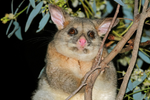
The Common Brushtail Possum (Trichosurus vulpecula) is Australia's largest and perhaps best-known possum.
Stocky, curious and highly adaptable, brushtails have successfully made themselves at home in bushland, farmland, parks and suburban backyards. Their thick, bushy tail helps with balance as they climb, while their strong claws allow them to move confidently through trees, across fences and, unfortunately for some homeowners, over rooftops.
One fascinating feature many people don't realise is that brushtails can vary considerably in colour. Across Australia, they range from pale silver-grey through to rich chocolate brown and almost black.
Here in the Sunshine Coast Hinterland, we often see the darker short-eared form, whose deep charcoal colouring surprises many people expecting every brushtail to be grey. They're the same species, simply displaying the wonderful variation that occurs across different regions.
Brushtails are generally solitary and territorial. Those loud growls, screeches and thumps you sometimes hear on the roof at night are usually two possums arguing over territory or competing for a mate—not the dramatic wildlife battle many people imagine.

The Common Ringtail Possum
Smaller and more delicate than the brushtail, the Common Ringtail Possum (Pseudocheirus peregrinus) is instantly recognisable by its slender body, pointed face and long tail with a distinctive white tip.
Unlike their more independent brushtail cousins, ringtails are often seen living in family groups and are generally quieter and less conspicuous.
One of their most remarkable behaviours is building nests known as dreys. Using leaves, bark and small twigs, they carefully weave surprisingly cosy nests among dense foliage, creating a sheltered home high in the canopy. While brushtails usually rely on tree hollows, ringtails are accomplished builders.
Their long prehensile tail acts almost like a fifth limb, helping them grip branches as they move effortlessly through the trees.

Australia's Amazing Gliders
Although many people simply call them "gliders," species such as the Sugar Glider are actually members of the possum family.
Rather than flying, they glide gracefully between trees using a thin membrane stretching from their wrists to their ankles. Watching a Sugar Glider launch silently into the darkness is one of Australia's most magical wildlife experiences.
Sadly, gliders are becoming increasingly vulnerable as forests become fragmented and the distance between trees grows too great for them to glide safely.
Their story is a powerful reminder that every mature tree plays an important role in keeping our native wildlife connected.
.More Than Just a Nocturnal Visitor
Possums are often dismissed as noisy roof dwellers or garden raiders, but they're far more important than many people realise.
In many ways, possums are among nature's quiet gardeners.
They're also creatures of habit.
Once a possum establishes its home range, it often follows exactly the same route every night—moving from tree to tree, across fences or along rooftops in search of food before returning to the same sleeping place before dawn.
They know where the food is.
They know where shelter is.
They know where danger lies.
It's little wonder they're reluctant to leave a place they know so well.
Home means just as much to a possum as it does to us.

Why Are Possums Living in Our Roofs?
If you've ever had a possum in your roof, you've probably wondered why it chose your house.
The truth is, it probably didn't.
It was simply looking for somewhere safe to sleep.
For thousands of years, possums relied on the hollows that formed naturally in mature trees. These hollows provided everything they needed—a dry place to escape the weather, protection from predators and, for mothers, a secure place to raise their joeys.
The problem is that suitable tree hollows are becoming increasingly difficult to find.
Unlike a bird's nest, which can be built in a matter of days, a tree hollow is created by time. Branches break away, insects tunnel through timber, fungi soften the wood and weather slowly shapes a cavity large enough for wildlife to use. Depending on the species of tree, this natural process can take well over a century.
When one of these old trees is removed, it isn't just a tree that's lost.
It may have been home to generations of possums, parrots, owls, microbats, gliders and countless other native animals, all relying on the same precious hollow.
Unfortunately, there simply aren't enough old trees left to meet the demand.
A roof cavity, while far from perfect, offers something surprisingly similar. It's elevated, dry, sheltered from the weather and relatively safe from many predators. To a possum searching for somewhere to spend the day, it can look remarkably like the hollow tree that once stood nearby.
Understanding this doesn't mean you have to accept a possum living above your bedroom forever.
But it does remind us that the possum isn't trying to invade our home.
It's simply trying to replace one it has already lost.
Why Are Possums So Noisy at Night?
If you've ever been woken by loud thumps across the ceiling, you could be forgiven for thinking you've got something much larger than a possum living in your roof.
In reality, possums are surprisingly light animals.
The reason they sound so loud is because roof cavities act like a giant amplifier. Every footstep echoes through the timber, making a three-kilogram possum sound more like a herd of kangaroos.
Certain times of the year can be particularly noisy.
During the breeding season, Brushtail Possums become more territorial. The growls, hisses and screeches you hear are often two possums arguing over territory or competing for a mate. It can sound quite dramatic, but it's perfectly normal behaviour.
Young possums leaving their mothers and establishing their own territories can also lead to more activity as they search for suitable homes.
Most possums leave their shelter shortly after sunset to begin feeding before returning again just before dawn. If you regularly hear footsteps at around the same time each evening, you're probably listening to a possum following its familiar nightly routine.

What Do Possums Eat?
One of the biggest misconceptions about possums is that they're scavengers living on scraps from our rubbish bins.
While they may occasionally investigate compost bins or fallen fruit, that's certainly not what nature intended.
Possums are primarily browsers.
Brushtail Possums enjoy a varied diet that includes eucalyptus leaves, young shoots, flowers, blossoms, native fruits, fungi and, occasionally, insects or other small invertebrates. They're particularly fond of fresh new growth, which explains why your prized rose or newly planted vegetable seedling sometimes becomes an overnight snack.
Ringtail Possums have an even more specialised diet, feeding mainly on leaves from eucalyptus, acacia and other native trees. Their digestive system has evolved to extract nutrients from fibrous plant material that many other animals simply couldn't digest.
As possums move through the trees feeding, they also help disperse seeds and, in some cases, pollen, quietly contributing to the health and regeneration of our native forests.
They're not simply feeding themselves.
They're helping keep Australia's bushland alive.

Should You Feed Wild Possums?
This is one of the questions I'm asked most often.
The simple answer is... usually not.
In an ideal world, healthy wild possums shouldn't need us to feed them at all.
Australia's native forests evolved to provide everything they require, and encouraging possums to remain wild is generally the best outcome for both the animals and the environment.
There are, however, exceptional circumstances.
During prolonged drought, after bushfires or while injured animals are being rehabilitated by licensed wildlife carers, supplementary feeding may become necessary.
For healthy suburban possums, though, our role is usually better focused on restoring their natural food sources rather than replacing them.
Planting native food trees and flowering shrubs provides a far more sustainable solution than placing food on the back verandah each evening.
Regularly leaving food out around your home can also unintentionally place possums at greater risk. Instead of feeding safely among the branches, they begin visiting verandahs, patios and the ground around houses, where they're far more likely to encounter dogs, cats and other dangers.
If you genuinely want to help local possums, it's far better to create natural habitat than encourage dependence on handouts.
If you do choose to offer the occasional treat, keep it natural and infrequent.
Small pieces of apple or pear can be enjoyed occasionally, while fresh native browse—such as suitable eucalyptus, bottlebrush or grevillea cuttings—is far closer to what possums have evolved to eat.
Foods that should never be offered include bread, biscuits, cakes, dairy products, chocolate, onions, garlic, avocado and heavily processed human foods.
Likewise, while some people leave out dog or cat food with good intentions, these foods contain far more protein and fat than a possum's digestive system is designed to handle and should never become part of their regular diet.
One of the greatest gifts you can give a possum isn't food. It's habitat.
Living Alongside Possums
Sharing your home with a possum doesn't mean you have to accept sleepless nights or damaged ceilings forever.
In most cases, it's possible to solve the problem without harming the animal.
The key is understanding that you're not trying to "win" a battle against the possum.
You're simply helping it find a better place to live.
Once you understand why the possum chose your roof in the first place, the solution often becomes much clearer.

What Should You Do If You Have a Possum in Your Roof?
The first and most important thing is...
Don't panic.
It's natural to want the scratching to stop immediately, but acting too quickly can sometimes make the situation much worse.
Never block the possum's entry hole as soon as you discover it.
If there's a mother with a dependent joey still inside, sealing the entrance could separate them, leaving the baby to slowly die from starvation or exposure.
Instead, spend a few evenings quietly observing where the possum enters and exits your roof.
Most possums leave shortly after dusk to begin feeding before returning again just before sunrise.
Once you've confirmed the possum has left—and you're absolutely certain no young remain inside—you can then look at preventing it from re-entering.
If you're uncertain, seek advice from a licensed wildlife rescue organisation before doing anything.
Sometimes, waiting one extra day can save a life.
Spring Is Baby Season
Spring is one of the busiest times of year for wildlife carers.
It's also the time when homeowners need to take extra care.
Many female possums have dependent joeys tucked safely inside their pouch or waiting quietly in the roof while Mum heads out to feed.
Every year, wildlife rescue organisations receive heart-breaking calls from people who unknowingly sealed a roof cavity, only to discover days later that a baby had been trapped inside.
It happens with the very best of intentions.
That's why patience matters.
When in doubt, ask for help.

Possum Boxes – Giving Wildlife a Second Chance
One of the most rewarding things you can do for local wildlife is install a possum box.
Think of it as replacing a home that nature spent more than a century creating.
A well-designed nest box provides a safe, dry alternative to your roof cavity and, in many cases, gives the possum somewhere far more suitable to live.
Don't expect instant results.
Wild animals are naturally cautious.
It may take weeks—or even months—before a possum decides to investigate its new home.
Install the box as high as practical on a mature tree, secure it firmly and, where possible, position the entrance away from the hot western sun and prevailing weather.
Like us, possums appreciate a home that's sheltered from the elements.
Nest boxes don't just benefit possums.
Depending on their design, they may also provide shelter for a variety of other native wildlife.
Every nest box installed is one small step towards replacing the homes we've taken away.
Why Relocating Possums Usually Doesn't Work
One of the most common questions people ask is:
"Can't I just catch it and take it somewhere else?"
Unfortunately, relocation is rarely the kind solution it appears to be.
Possums are highly territorial and know their home range incredibly well.
Move a possum into unfamiliar territory and it suddenly has to compete with resident possums for food, shelter and nesting sites.
Many don't survive the experience.
This is one of the reasons possums are protected throughout Australia, and why relocation is tightly regulated by state wildlife authorities.
The kindest solution is almost always to help the possum remain safely within its own home range—just not inside your roof.

Are Possums Protected in Australia?
Many people are surprised to learn that possums are protected native wildlife throughout Australia.
While the exact regulations vary between states and territories, possums cannot simply be trapped and relocated wherever we choose. They are protected under state wildlife legislation because they are an important part of Australia's natural environment.
If you have a possum living in your roof, it's always worth checking the regulations in your state before taking any action. In many cases, there are specific guidelines about when and how a possum may be excluded from a building, and relocation distances are often strictly controlled.
The goal isn't to make life difficult for homeowners.
It's to give possums the best possible chance of surviving in the area they already know.
If you're ever unsure, your local wildlife authority or licensed wildlife rescue organisation will be able to provide advice that's appropriate for your location.
Protecting Your Garden Without Harming Wildlife
There's nothing more disheartening than waking up to discover your favourite roses, herbs or vegetable seedlings have been nibbled overnight.
It's easy to become frustrated.
But remember...
Your garden probably looks just as inviting to a hungry possum as a buffet looks to us.
Rather than seeing wildlife as the enemy, look for ways to reduce temptation.
Protect vegetable gardens with wildlife-friendly netting.
Use tree guards around young fruit trees.
Grow particularly precious plants in enclosed areas.
And wherever possible, include native shrubs and flowering plants that naturally provide food for birds, insects and possums alike.
Bottlebrush, grevillea, lilly pilly and many native wattles not only support wildlife but also create a beautiful Australian garden filled with life.
Sometimes, sharing a little of our garden can make a world of difference.
After all, most possums only take what they need.

When Feeding Wildlife Can Do More Harm Than Good
We all enjoy helping animals.
It's part of what makes us human.
But feeding wildlife isn't always the act of kindness it appears to be.
When wild animals become dependent on people for food, several problems can arise.
They may lose their natural wariness of humans.
They may begin crossing roads more frequently.
They can attract unnaturally large numbers of animals into one area, increasing competition, aggression and the spread of disease.
Neighbours may also become frustrated when larger numbers of possums begin visiting their gardens and roofs.
That's why wildlife carers generally encourage people to feed the habitat rather than the animal.
Plant native trees.
Grow flowering shrubs.
Provide water during hot weather.
Create safe places to shelter.
Those simple actions support wildlife without changing its natural behaviour.
Perhaps the greatest gift we can give our native animals is allowing them to remain wild.
Dogs and Possums – Preventing Tragedy
One of the saddest realities for wildlife carers is that dog attacks are among the most common reasons possums come into care.
The heart-breaking part is that neither animal is to blame.
Dogs are simply following their natural instincts. A possum on the ground, particularly at night, is something many dogs instinctively chase.
Possums, on the other hand, spend most of their lives safely in the trees. They usually come to the ground only when travelling between trees that no longer connect, crossing open spaces or searching for food.
As our suburbs continue to grow and mature trees become increasingly fragmented, these ground journeys become more frequent—and far more dangerous.
Dusk and dawn are when possums are most active, and unfortunately, they're also the times when many vehicle strikes occur. Slowing down on bush roads, particularly during spring when young possums are beginning to explore on their own, can make a real difference. Sometimes arriving home a minute later is all it takes to save a life.
If possums regularly visit your yard, consider letting your dog outside only after you've checked the area, particularly during the evening and early morning when possums are most active.
Keeping dogs indoors overnight, where practical, or supervising them during late-night toilet breaks can dramatically reduce the risk of wildlife encounters.
Simple changes in routine can prevent tragedy for both your pet and our native wildlife.

Rat Poison Doesn't Just Kill Rats
When people think about rat poison, they usually think about rodents.
Few realise the devastating impact these products can have on the rest of Australia's wildlife.
A poisoned rat or mouse rarely dies immediately.
Instead, it often leaves the baited area, becoming slow and vulnerable before eventually succumbing to the poison.
Along the way, it may be eaten by an owl, kookaburra, tawny frogmouth, goanna, snake, quoll—or even scavenged by a curious possum.
This is known as secondary poisoning, and it's one of the hidden dangers facing wildlife in urban and rural Australia.
The effects can continue travelling through the food chain long after the poison has been laid.
If rodent control is necessary, look for methods that reduce the risk to non-target wildlife and always follow the manufacturer's directions carefully.
Protecting our homes shouldn't come at the expense of the animals that belong here too.
What If You Find an Injured Possum?
Finding injured wildlife can be confronting.
Your first instinct is usually to help, and while that's admirable, it's important to make sure both you and the animal stay safe.
An injured possum is frightened, confused and in pain.
Even the gentlest animal may scratch or bite if it feels threatened.
If it's safe to do so, keep children and pets away from the animal and gently place a towel or light blanket over it to help reduce stress.
If the possum can be safely contained, carefully place it into a well-ventilated cardboard box lined with a soft towel or blanket. Keep the box somewhere warm, dark and quiet while you seek help.
Avoid handling the possum unnecessarily and, unless advised by a wildlife carer or veterinarian, don't offer food or water. Injured wildlife often requires specialised care, and offering the wrong food or fluids can sometimes do more harm than good.
The most important thing you can do is contact a licensed wildlife rescue organisation or your nearest veterinarian as soon as possible.
Many veterinary clinics will assess injured native wildlife and arrange transfer to an authorised wildlife carer.

Always Check the Pouch
This is perhaps the most important message in this entire article.
If you come across a female possum that has been killed on the road or attacked by a dog, always check the pouch if it is safe for you to do so.
A joey may still be alive.
Every year, countless orphaned baby possums are rescued because someone took an extra thirty seconds to look.
If you find a joey, don't remove it unless instructed to do so by a wildlife carer. Keep the mother and baby together, if possible, place them in a secure box and contact a wildlife rescue organisation immediately.
If the joey has already left the pouch and is clinging to its mother's back, the same advice applies.
Even if the baby appears uninjured, it still needs specialist care.
That one simple act—checking the pouch—has saved thousands of young possums across Australia.
It might just save another.
Who Should You Call?
Wildlife rescue organisations work tirelessly behind the scenes, responding to thousands of calls every year—often as volunteers.
If you find injured, orphaned or distressed wildlife, contact your nearest licensed wildlife rescue organisation as soon as possible.
Depending on where you live, this may include organisations such as:
Keep the animal warm, quiet and secure while waiting for advice.
Sometimes, making one phone call is the difference between life and death.

Why Old Trees Matter
It's easy to admire the beauty of an old gum tree.
What we often don't see is the entire neighbourhood living inside it.
Mature trees provide food, shelter and nesting sites for countless native animals, many of which depend on hollows that have taken generations to form.
These homes cannot simply be replaced by planting another tree.
While planting native trees is one of the most important things we can do for future wildlife, it may take well over a century before those young trees develop hollows of their own.
Whenever it's safe to do so, preserving old hollow-bearing trees is one of the greatest gifts we can give Australia's wildlife.
Because once a hollow is gone...
It's gone for generations.
Every One of Us Can Make a Difference
It's easy to look at the challenges facing Australia's wildlife and wonder whether one person can really make a difference.
The truth is, wildlife conservation doesn't always begin in national parks or government programs.
More often than not, it begins in an ordinary backyard.
Leaving an old hollow-bearing tree standing where it's safe to do so.
Installing a possum box.
Planting native flowering shrubs.
Checking the pouch of a road-killed possum.
Keeping your dog inside at night if possums regularly visit.
Choosing alternatives to wildlife-threatening poisons.
Making one phone call when you find an injured animal.
These may seem like small actions.
But together, they save countless lives every single year.
Conservation isn't simply about protecting wilderness.
It's about making room for wildlife wherever we live.
After all, Australia belongs to all of us.
And that's where I'd like to leave you—not with more facts, but with one final reflection.

My Final Thoughts
Over the years, I’ve had the privilege of caring for injured possums, raising orphaned joeys and releasing them back into the wild where they belong.
I’ve also stood on roadsides after new housing developments have gone in and seen the heart-breaking reality that often follows.
A mother possum searching for a new home because the tree she once lived in has been cleared.
A frightened young possum trying to cross a road it never had to cross before.
A joey still tucked safely inside its mother’s pouch, completely unaware that its world has changed forever.
Those are the moments that stay with you.
We measure progress by the homes we build. Perhaps we should also measure it by the wildlife we choose to protect along the way.
Every housing estate, every new road and every old hollow-bearing tree that’s removed changes the lives of the wildlife that was there long before we arrived.
That doesn’t mean progress should stop.
It simply means progress carries responsibility.
Over the years, I’ve met people who genuinely didn’t care if their dog killed a possum because they believed possums were nothing more than oversized rodents. Others simply saw them as pests that didn’t belong in suburbia.
The truth couldn’t be further from reality.
Possums are native Australian marsupials. They’ve been quietly playing their role in our forests for millions of years—dispersing seeds, browsing native vegetation and raising their families in the safety of tree hollows long before the first houses were ever built.
One thing I’ve learned through wildlife caring is that compassion doesn’t always require grand gestures.
It might be slowing down on a country road after dark.
Installing a possum box before sealing your roof.
Checking the pouch of a road-killed possum.
Or making one phone call that gives an injured animal a second chance.
Compassion often begins with small choices.
But those small choices can change a life.

If this article has helped you see possums a little differently, then I hope you'll never hear those late-night footsteps on your roof in quite the same way again.
Because understanding leads to compassion.
And compassion leads to conservation.
After all, these remarkable little marsupials aren't asking for much.
Just a safe place to call home.
© Majella Gee – July 2026
#AustralianWildlife #Possums #BrushtailPossum #RingtailPossum #WildlifeConservation #WildlifeRescue #CoexistingWithWildlife #WildlifeEducation