
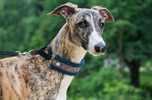
More Than a Racing Dog: Why Every Greyhound Deserves a Second Chance
, by Majella Gee, 36 min reading time
, by Majella Gee, 36 min reading time
Greyhounds are among Australia's most misunderstood dogs. Beyond the speed, the racing and the headlines is a calm, affectionate companion with a history stretching back thousands of years. This evidence-based feature explores the lives of retired greyhounds, the people helping them find new beginnings, and why every greyhound deserves the chance to be valued for far more than its racing career.
Behind the speed, the betting and the statistics is one of Australia's most gentle and misunderstood dogs.

Sometimes a Single Story Changes Everything
Sometimes a single story changes the way you see the world.
Not because it tells you something new, but because it makes you see something familiar differently.
That was my experience when I learned about Tarawi Minnie.
Like many Australians, I'd followed conversations about greyhound racing over the years. I knew there were passionate opinions on all sides, but Tarawi Minnie's story wasn't just another headline. It stopped me and left me with a question I couldn't shake.
When did a dog's right to live become dependent on how useful it is to us?
This article isn't about assigning blame. Nor is it about condemning an entire industry or overlooking the many people who genuinely care for these remarkable dogs.
It's about recognising that every greyhound is far more than a racing dog.
I've spent more than forty years working with companion animals, helping people understand them, care for them and build stronger relationships with them. During that time, I've seen what happens when animals are misunderstood or valued only for the role they perform.
Greyhounds deserve to be seen differently.
The moment that changed my perspective didn't happen at a racetrack.
It happened over breakfast at a local café.

The Morning Everything Changed
Several years ago, I was having breakfast at a local café when a woman arrived with two retired greyhounds. As she settled in with friends, the dogs quietly lay beside her table. They weren't pulling on their leads or seeking attention. They simply watched the world go by, completely at ease beside the person they trusted.
After a few minutes, one of the greyhounds wandered over to where I was sitting. Without hesitation, he leaned gently against my leg, rested one paw across my foot and looked up at me. There was nothing demanding or uncertain about him. It was simply a calm moment of connection that lasted only a few seconds, yet it completely changed the way I saw the breed.
Until then, I'd thought of greyhounds as racing dogs. Standing beside me wasn't a racing dog. He was simply a dog—curious, affectionate and trusting. In that moment, I realised how easily we allow a label to define an animal before we've taken the time to know it.
I left the café with more questions than answers. Who were these dogs beyond the racetrack? What were they really like? And why had I never taken the time to find out?
Sometimes changing your mind doesn't happen because someone wins an argument. Sometimes it happens because a dog quietly rests a paw on your foot.

The Dog Behind the Speed
The questions I carried home from that café led me to learn more about greyhounds. The more I discovered, the more I realised how much of their story had been overshadowed by the sport they are most closely associated with.
Long before greyhounds became synonymous with racing, they were admired for their grace, athleticism and loyalty. They are one of the world's oldest dog breeds, with images of greyhound-like dogs appearing in ancient Egyptian art thousands of years ago. Over the centuries, they hunted alongside people, lived in royal households and became renowned for their speed, elegance and an easy-going nature.
Today, while many Australians know greyhounds because of racing, those who share their homes with them often describe a very different dog. They describe a quiet companion who enjoys being close to people, forms strong bonds with its family and is just as happy relaxing on a comfortable bed as it is stretching its legs on a walk.
Greyhounds are extraordinary athletes. Built for acceleration rather than endurance, they can reach speeds of more than 60 kilometres an hour in just a few strides, making them one of the fastest dog breeds in the world. Ironically, that remarkable speed is only a small part of who they are. Unlike breeds developed for hours of continuous work, greyhounds are sprinters. After a daily walk and the chance to stretch their legs, many are perfectly content to spend much of the day resting. It's one of the reasons they're affectionately known as "45-mile-an-hour couch potatoes."
Like every breed, greyhounds are individuals, and their personalities are shaped by genetics, early experiences, training and environment. Even so, they have earned a reputation for being gentle, sensitive and easy to live with. Some are playful and outgoing, while others are more reserved, but many share a quiet, affectionate nature that surprises people meeting them for the first time. The powerful athlete they expected is often replaced by a calm companion who simply wants to be close to the people who love them.
Perhaps the most surprising fact of all is how much of a greyhound's life may still lie ahead after racing. A healthy greyhound can live 12 to 15 years, sometimes longer, yet many finish their racing careers when they are only three or four years old. Pause for a moment and consider what that really means. A dog retiring at four years of age could still have another decade or more to enjoy life as a cherished family companion—to discover the comfort of a home, the security of belonging and the simple pleasures that so many pets experience every day.
Viewed through that lens, retirement takes on a very different meaning. It isn't the end of a greyhound's story. For many, it's the beginning of a new chapter—one filled with companionship, comfort and the opportunity to simply be a dog.

Life Beyond the Track
Every racing greyhound reaches a point where its career comes to an end.
For some, retirement comes with age. For others, it follows injury or simply reflects the reality that they are no longer competitive. Whatever the reason, one chapter closes and another begins. The question is what that next chapter will look like.
For many retired greyhounds, life after racing is filled with possibilities. Some move directly into loving homes through industry adoption programs. Others find their way into the care of independent rescue organisations, where volunteers and foster carers help prepare them for life as family companions. Their journeys may be different, but the goal is the same—to give each dog the opportunity to enjoy a safe, secure and fulfilling future.
That transition is rarely as simple as opening a front door.
A greyhound that has spent its life in a racing environment is stepping into a world that can be completely unfamiliar. Everyday experiences such as climbing stairs, walking across polished timber floors, hearing a vacuum cleaner or settling onto a family sofa may all be new. Even the sounds and routines of a busy household can take time to understand.
Like any dog adapting to a major life change, retired greyhounds learn at their own pace. Some settle into home life almost immediately, while others need patience, consistency and reassurance as they build confidence. Success isn't measured by how quickly they adapt but by the trust they develop along the way.
This is where foster carers play an invaluable role.
They provide a bridge between the racetrack and family life, introducing greyhounds to everyday experiences in a safe and supportive environment. They celebrate milestones that many of us might take for granted—the first time a greyhound confidently climbs a staircase, discovers the comfort of a soft bed, plays with a toy or chooses to rest beside someone they trust.
To an outside observer, these moments may seem ordinary.
To a retired greyhound, they represent something far more significant.
They represent safety.
They represent belonging.
Perhaps, for the first time in their lives, they represent the freedom to simply be a dog.
None of this happens by chance. It is made possible by trainers committed to responsible retirement, adoption programs, rescue organisations, foster carers, veterinarians and families willing to open their homes and their hearts.
Their work reminds us that a racing career may define only a few years of a greyhound's life.
It should never define the rest of it.
Questions Worth Asking
For thousands of retired greyhounds, the finish line marks the beginning of a very different life—one filled with safety, companionship and the comfort of a family home. That future is made possible by the dedication of many people committed to helping them make the transition.
But not every story ends that way.
That is why conversations about greyhound welfare continue long after the final race has been run. What happens to dogs that are not rehomed? How successful are adoption programs? And what responsibilities do breeders, trainers, racing authorities, governments and the wider community share once a greyhound's career comes to an end?
These questions cannot be answered by opinion alone. They deserve to be considered through evidence—and the evidence reveals a picture that includes both genuine progress and reasons for continuing concern.
One of the first difficulties is that there is no single, independently verified national record showing what happens to every greyhound born into the Australian racing industry. Rules, reporting systems and oversight differ between states, making national comparisons difficult. RSPCA Australia has called for comprehensive birth-to-death records, independently verified data and a national identification and traceability system so that every greyhound can be accounted for throughout its life.
That lack of a complete national picture does not mean no progress has been made.
In several jurisdictions, lifecycle reporting has become more detailed, adoption programs have expanded and stronger rehoming requirements have been introduced. New South Wales now publishes quarterly information covering breeding, retirement, euthanasia and death. Victoria also reports substantial numbers of retired greyhounds moving into homes through its Greyhound Adoption Program, direct rehoming by participants and other organisations. In 2023–24, Victoria's industry adoption program found first-time homes for 1,009 greyhounds, while more than 2,500 were reported as rehomed or retained as pets across the state's industry.
Those figures represent thousands of individual dogs given the opportunity to begin another life. They also reflect the work of people within the racing industry who take retirement seriously, as well as the contribution of adoption staff, rescue groups, foster carers, veterinarians and new owners. Genuine improvements should be recognised, because acknowledging progress encourages higher standards rather than diminishing the welfare concerns that remain.

There are also signs that efforts to manage the number of dogs entering the industry are having an effect in some states. In New South Wales, 3,012 pups were reported as whelped during the 2024–25 financial year—the lowest annual total recorded there in seven years. Matching breeding numbers more closely to the availability of racing and rehoming opportunities is important because every dog bred will eventually require lifelong care, whether or not it ever races.
Yet rehoming figures must be read carefully.
A dog recorded as "retired" has not necessarily been placed permanently with a family. Some remain with industry participants, some enter adoption facilities, and others are transferred privately. In one New South Wales quarter during 2025, 772 retirements were reported: 41 per cent of those dogs were retained by industry participants, 38 per cent entered the industry's Greyhounds as Pets program, 14 per cent were privately rehomed and 6 per cent went to another adoption agency. These figures provide useful information, but they also illustrate why the word retired cannot always be treated as another word for adopted.
The quality and durability of the placement matter too. A successful outcome is not simply moving a greyhound out of a racing kennel; it is finding a suitable home and providing enough preparation and support for the dog to remain there. Greyhounds may need help adjusting to unfamiliar environments, other animals, household routines and experiences they did not encounter during their racing lives. RSPCA Australia has raised concerns about long waits in rehoming facilities, privately arranged placements that may receive little follow-up, and dogs being returned because of behavioural difficulties or changes in an adopter's circumstances.
This is why early socialisation and preparation for life beyond racing matter so much.
A dog introduced gradually to different people, animals, sounds, surfaces and environments is likely to be better equipped for the transition into a family home. Preparing greyhounds for retirement should not begin when their racing careers finish. It should form part of their care from the beginning.
The Australian Veterinary Association takes a similar whole-of-life view. Its policy states that breeding, rearing and training should support eventual rehoming, that adoption programs should be nationally coordinated and funded by the industry, and that euthanasia should be considered only as a last resort when behavioural assessment and rehabilitation have shown that rehoming is not possible.

Veterinarians often face some of the most difficult moments in a greyhound's life. They treat injuries, assess pain, guide rehabilitation and, when suffering cannot be relieved, may be required to perform humane euthanasia.
The existence of euthanasia figures should never be used to cast blame automatically on the veterinarians carrying out that responsibility. The more important questions are why the dog required euthanasia, whether the injury or illness could have been prevented, what treatment and rehabilitation were available, and whether every reasonable alternative was considered.
Racing itself carries a risk of injury. Greyhounds run at high speed in close proximity, particularly around bends where collisions and falls can occur. Track design, surface preparation, race conditions, veterinary attendance and the treatment offered after injury can all influence the outcome. Both the Australian Veterinary Association and RSPCA Australia have called for stronger injury prevention, transparent reporting and adequate rehabilitation for injured dogs.
Some improvement has been recorded. In New South Wales, the rate of racing injuries resulting in trackside euthanasia or sudden death was reported as 0.21 per 1,000 starts in 2023–24, down from 0.66 per 1,000 starts in 2018–19. That reduction matters and suggests that reforms can save lives. It does not, however, make serious injury unimportant or remove the need to examine every preventable death.
Recent inquiries have reinforced the need for continued scrutiny. A 2023 South Australian review produced 86 recommendations covering welfare, integrity, governance and administration, while parliamentary examination in Western Australia has raised further questions about injuries, deaths, transparency and industry oversight. These inquiries are reminders that reform is not a single announcement or policy change. It requires implementation, independent monitoring and clear evidence that conditions are improving for the dogs themselves.
Perhaps the most important principle is also the simplest: responsibility for a greyhound should not end when its economic value does.
A racing career may last only a few years, but the dog's need for care continues for the rest of its life. Responsible retirement therefore requires more than finding available kennel space or recording a transfer in a database. It requires appropriate veterinary care, honest behavioural assessment, preparation for domestic life, careful matching with adopters and support after the dog has entered its new home.
The evidence shows that significant improvements have been made and that thousands of greyhounds are now enjoying the futures they deserve. It also shows why transparency, lifetime accountability and sufficient rehoming capacity remain essential.
Behind every figure is an individual dog.
And behind many of the best outcomes are people determined to ensure that the end of a racing career becomes the beginning of something better.

The People Changing Lives
Across Australia, thousands of people devote their time, experience and compassion to helping retired greyhounds begin new lives. Some work within industry-funded adoption programs. Others volunteer with independent rescue organisations. Many are foster carers who open their homes to dogs taking their first tentative steps into family life.
They come from different backgrounds and sometimes hold different views about greyhound racing, but they are united by a common goal: giving every greyhound the opportunity to become a much-loved companion.
For foster carers, that journey often begins with patience rather than perfection. They teach dogs that televisions aren't frightening, stairs can be climbed, polished floors aren't dangerous and a soft bed is something to be enjoyed rather than ignored. They celebrate achievements that most dog owners would barely notice—the first toy, the first zoom around the backyard, the first confident wag of the tail.
Adopters also play an equally important role. Many describe being surprised by just how easily greyhounds settle into family life. The athlete they expected often reveals a trusting, affectionate companion who enjoys a daily walk before happily spending the afternoon asleep on the lounge.
Across Australia, organisations such as Greyhounds As Pets (GAP), Friends of the Hound, Gumtree Greys, Amazing Greys, Greyhound Angels and many smaller community rescue groups have helped thousands of retired greyhounds find loving homes. Some work closely with the racing industry, while others operate independently, but all share a commitment to helping these dogs make a successful transition from the racetrack to family life.
Of course, every dog is different. Some adapt quickly, while others need more time and support. Successful adoption depends on matching the right dog with the right home, providing honest information about each dog's needs and ensuring help is available if challenges arise. That's one reason foster care has become such an important part of the rehoming process.
Whether through industry programs, volunteer rescue groups or individual acts of kindness, these collective efforts have transformed the lives of thousands of greyhounds that might otherwise have been overlooked.
Each successful adoption is more than a happy ending.
It is proof that a greyhound's greatest race may be the one that leads them home.

Every One of Us Can Help
By now, you may be wondering what role any one person can play in a conversation that involves racing authorities, governments, welfare organisations and thousands of dogs across Australia.
The answer is simple.
More than you might think.
Not everyone has the time, space or lifestyle to adopt a retired greyhound, and that's perfectly okay. Giving a dog a home is a long-term commitment and should always be a decision made with careful thought. Responsible adoption is about finding the right match for both the dog and the family, not simply responding to emotion.
For those who are able, however, adopting a retired greyhound can be one of the most rewarding experiences imaginable. Time and again, families describe being surprised by the quiet companionship these dogs bring into their homes. The athlete they expected often turns out to be a gentle soul who is happiest sharing the sofa, joining a daily walk and simply being close to the people who love them.
Adoption is only one way to help.
Across Australia, rescue organisations rely on foster carers who provide temporary homes while greyhounds adjust to life beyond the racetrack. Foster care gives dogs the opportunity to experience everyday family life, while helping rescue groups learn more about each dog's personality, confidence and individual needs before matching them with a permanent home.
Many organisations also depend on volunteers who transport dogs to veterinary appointments, assist at adoption days, help with fundraising or simply lend a hand wherever it is needed. Others rely on donations to cover food, veterinary treatment, behavioural support and the many costs involved in preparing greyhounds for their new lives.
Learn about the breed before repeating the myths.
For many years, greyhounds have been misunderstood. Some people assume they need enormous amounts of exercise because they are racing dogs. Others worry they cannot adapt to family life. While every dog is an individual, experience has shown that many retired greyhounds become calm, affectionate companions when given the opportunity to adjust to home life.
Conversations matter too.
Whether you support greyhound racing, oppose it or remain undecided, respectful discussion is far more likely to improve animal welfare than division. Listening to evidence, recognising genuine progress, acknowledging where further improvements are needed and encouraging responsible lifelong care all contribute to better outcomes for the dogs themselves.
Ultimately, this isn't simply a story about racing.
It's a story about responsibility.
Every person involved in a greyhound's life—breeders, trainers, veterinarians, adoption staff, foster carers, rescue volunteers, policymakers and pet owners—has an opportunity to shape that dog's future.
So do the rest of us.
Because every time a retired greyhound finds a loving home, every time someone chooses to foster, volunteer, donate or simply learn a little more about the breed, another dog is given the chance to leave the racetrack behind and discover something far more important.
A place to belong.

More Than a Racing Dog
When I think back to that quiet morning at the café, I often wonder why such a simple encounter stayed with me.
Perhaps it was because, for the first time, I wasn't looking at a greyhound through the lens of racing. I wasn't thinking about speed, performance or competition. I was simply sharing a moment with a gentle dog that wanted nothing more than a brief connection.
That encounter reminded me how easily we allow labels to shape our thinking. We speak of racing dogs, working dogs or assistance dogs as though the role they perform defines who they are. Yet beneath those labels is something much simpler.
Simply a dog.
Greyhounds have been bred for remarkable speed, but speed is only one chapter in their story. Long after the finish line has been crossed, they still seek the same things every companion animal does: safety, kindness, comfort and the chance to belong.
The conversations surrounding greyhound racing will no doubt continue. There will always be differing opinions about the industry, its future and the reforms still needed. Those discussions are important because they encourage accountability and continued improvement.
But whatever our individual views, one principle should unite us.
Every greyhound deserves to be treated with dignity throughout its life.
Not because it won races.
Not because it earned prize money.
Not because it was useful.
Simply because it is a living, feeling animal deserving of compassion and care.
If this article encourages just one person to look beyond the stereotypes, to learn more about these remarkable dogs or to consider giving a retired greyhound a second chance, then perhaps Tarawi Minnie's legacy—and the quiet greyhound who rested a paw on my foot that morning—will continue in the most meaningful way possible.
Sometimes changing the world doesn't begin with changing everyone's mind.
Sometimes it begins by changing one.
"A racing career may define only a few years of a greyhound's life. It should never define the rest of it."
— Majella Gee
© 2026 Majella Gee. All rights reserved.

About the Author
Majella Gee is an Australian pet educator, author and advocate for responsible pet ownership. For more than four decades she has helped people better understand, care for and live alongside the animals who share their lives through education, writing and practical advice.
#Greyhounds #GreyhoundAdoption #GreyhoundRescue #AnimalWelfare #ResponsiblePetOwnership #CompanionDogs #RetiredGreyhounds #RescueDogs #DogsAustralia #MoreThanARacingDog