
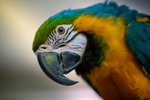
Parrots as Pets: Beautiful Companions or More Than You Bargained For?
, by Majella Gee, 28 min reading time
, by Majella Gee, 28 min reading time
Thinking about getting a parrot? Before you fall in love with those colourful feathers and clever tricks, there's a lot you need to know. From noise levels and destructive beaks to diet, lifespan, and common health problems, this guide explores the realities of responsible parrot ownership and helps you decide whether a parrot is the right companion for your lifestyle.
Few animals can make you laugh, amaze you, destroy your furniture, wake the neighbours and steal your lunch all in the same day quite like a parrot.
They are intelligent, entertaining, affectionate and, in many cases, absolutely stunning to look at. It's easy to understand why so many people fall in love with them. Unfortunately, it's also easy to understand why so many end up being rehomed.
The reality is that many people fall in love with the idea of owning a parrot without fully understanding what comes with it. That adorable baby bird quietly perched in a cage today may eventually become a screaming teenager with bolt cutters attached to its face.
And that's not necessarily a bad thing.
It's simply what parrots do.
The secret to successful parrot ownership isn't changing the bird. It's understanding the bird before you bring it home.

Not All Parrots Are the Same
One of the biggest mistakes people make is assuming a parrot is a parrot. In reality, there is a world of difference between a budgie, a cockatiel, a Galah, an Eclectus, an African Grey, a cockatoo or a macaw.
For beginners, budgies and cockatiels are often the easiest place to start. They're generally smaller, easier to house, less destructive and more forgiving of beginner mistakes. That doesn't mean they're maintenance-free, but they're usually a more realistic introduction to bird ownership.
Move into species such as galahs, rosellas, lorikeets and conures, and you're dealing with larger personalities, stronger beaks and considerably more noise. Then there are the bigger parrots—African Greys, Eclectus parrots, Amazons, macaws and the larger cockatoos. These birds are incredibly intelligent and often require significant daily interaction, enrichment and mental stimulation.
These aren't birds you fit into your lifestyle.
They're birds you build part of your lifestyle around.
Before purchasing any parrot, it's also worth checking your local regulations. Depending on your state or territory, some native bird species require permits or licences to keep legally. A reputable breeder should be able to guide you, but ultimately it's the owner's responsibility to ensure they're complying with the law.

A Commitment Measured in Decades
Many people spend more time researching a new television than they do researching a parrot.
That's a problem.
A budgie may live 5–15 years. Cockatiels commonly reach 15–25 years. Galahs can live 40 years or more, while many cockatoos and macaws can live 50–80 years and sometimes beyond.
Think about that for a moment.
Your bird may outlive your dog.
Your cat.
Possibly even you.
One of the most important questions prospective owners rarely ask is: who will care for this bird if something happens to me?
It's not a pleasant conversation, but it's an important one. If you're considering a long-lived species, the person who may eventually inherit that bird should understand the commitment before you bring the bird home—not after.
A parrot should never become an unexpected surprise in someone's will.

One Bird or Two?
This is one of the most common questions new bird owners ask.
The answer depends largely on the species, your lifestyle and how much time you can genuinely dedicate to your bird.
Parrots are social animals. In the wild, many species spend much of their lives interacting with their flock. A bird left alone all day with little interaction can become lonely, bored and frustrated.
For some owners, keeping a compatible pair can provide companionship when humans aren't around. However, two birds also mean double the mess, double the food, double the veterinary expenses and, in some cases, double the noise.
Two birds can also bond strongly with each other and become less interested in interacting with their humans.
There isn't a one-size-fits-all answer.
What matters is understanding the species you're considering and being honest about how much time you'll realistically have available.

The Noise Factor Nobody Talks About
Social media has a wonderful way of showing the entertaining side of parrots.
The talking.
The singing.
The dancing.
The hilarious one-liners.
What it doesn't show quite so often is the soundtrack that comes with the rest of the day.
Parrots are vocal animals. Some species are relatively quiet, while others can produce sounds capable of travelling across an entire neighbourhood.
If you live in an apartment, townhouse or a suburban estate where houses are built close together, noise needs to be one of your first considerations.
Many parrots are surrendered not because they're aggressive or unhealthy, but because the owners underestimated just how vocal they could be.
Before choosing a bird, ask yourself a simple question:
Can my neighbours tolerate noise?
Can my family tolerate noise?
Can I tolerate noise?
Because once the novelty wears off, the bird still needs a home.

The Destruction Factor
Let's talk about that beak.
Parrots don't use their beaks just for eating. They use them to climb, investigate, manipulate objects, strip bark, crack seed pods and, occasionally, redesign your home.
One of our galahs spent a great deal of time out of his cage and eventually discovered speaker wires hidden beneath the carpet. He systematically removed them.
Another favourite project involved chewing part of a timber balustrade down to something resembling a toothpick after being left unattended.
Funny now.
Far less funny at the time.
The important thing to understand is that this wasn't bad behaviour. It was perfectly normal parrot behaviour.
Parrots are designed to chew. If they don't have appropriate things to destroy, they'll often create their own entertainment.
Usually at your expense.

Housing, Exercise and Enrichment
One of the biggest misconceptions about parrots is that a cage is where they live.
A cage should be a safe place to sleep, eat, rest and spend short periods of time when supervision isn't possible. It should never be viewed as a permanent living space.
Many parrots are kept in cages that are simply too small. Owners often justify this by saying the bird comes out regularly, but when you consider the distances wild parrots fly every day, it quickly puts things into perspective.
Even the smallest parrots are designed for movement. Larger species such as cockatoos and macaws are capable of covering enormous distances in the wild. Expecting them to spend most of their lives in a cage where they can barely stretch their wings is hardly fair.
Bigger is always better.
A cage should allow a bird to fully stretch its wings without touching the sides and provide enough room for climbing, playing and moving naturally. For larger species, a dedicated aviary or safe flight area is often a far better option than even the biggest indoor cage.
Inside the cage, variety matters.
Many cages still come equipped with nothing more than smooth dowel perches. While convenient for manufacturers, they're not ideal for birds. In nature, parrots move between branches of different sizes, shapes and textures throughout the day. This variation helps exercise their feet and prevents pressure-related problems.
Natural branches make excellent perches and provide a far more natural environment. Different diameters encourage healthy foot function and give birds opportunities to use their feet the way nature intended.
Chewing opportunities are equally important.
Remember those bolt cutters attached to your parrot's face?
They're designed to be used.
Providing safe chew toys, untreated branches, shreddable materials and enrichment items can help direct that natural behaviour away from your furniture, door frames and electrical cords.
Will it stop every act of destruction?
Probably not.
But it will certainly reduce the odds of finding your balustrade transformed into toothpicks.

Diet: More Than a Bowl of Seed
One of the biggest contributors to poor health in pet parrots is diet.
Unfortunately, many birds spend years eating little more than seed.
While seed can form part of a balanced diet, it should not be the entire diet.
Many supermarket seed mixes are high in fat and low in essential nutrients. Over time, this can contribute to obesity, vitamin deficiencies, weakened immunity and fatty liver disease.
If you fed your child nothing but sunflower seeds every day, people would rightly question your parenting.
Yet countless birds live exactly that way.
A healthy parrot diet should include a wide variety of fresh foods. Leafy greens, vegetables, herbs, sprouts and safe fruits all have an important role to play. Many parrots also enjoy safe native browse, which provides both nutrition and enrichment.
Fresh clean water should always be available and changed daily.
Variety isn't simply a nice addition to a bird's diet.
It's essential.

Common Health Problems in Parrots
Birds are masters at hiding illness.
In the wild, appearing weak can make an animal vulnerable, so many birds instinctively conceal signs of sickness for as long as possible.
This means that by the time a bird looks unwell, it may already be seriously ill.
One of the most heart-breaking diseases affecting parrots is Psittacine Beak and Feather Disease, commonly known as PBFD.
I experienced this first-hand with three long-billed corellas purchased from reputable sources. Despite every effort, all three eventually succumbed to the disease.
It was devastating.
And it reinforced the reality that even when owners do everything right, disease can still occur.
PBFD affects feather growth, feather quality, the beak and the immune system. It can be a cruel disease for both birds and their owners.
Other common health problems seen in parrots include obesity, fatty liver disease, respiratory infections, overgrown nails and beaks, and stress-related feather plucking.
Feather plucking is often one of the most misunderstood issues in pet birds. While medical causes should always be investigated, boredom, loneliness, stress, frustration and lack of enrichment can also play a significant role.
This is why housing, diet, exercise and mental stimulation are so closely linked to overall health.
They're not separate topics.
They're all connected.
A good avian veterinarian is worth their weight in gold, and regular observation remains one of the most valuable tools any bird owner has.

Choosing a Healthy Bird
Whether you're buying from a breeder, a pet shop or adopting a rescue bird, take the time to observe carefully.
Healthy birds are generally bright, alert, curious and responsive to what's happening around them.
Look for clear eyes, clean nostrils and smooth, well-maintained feathers. Watch how the bird moves, interacts and responds to its environment.
A bird sitting quietly in a corner while others are active may be telling you something important.
Trust your instincts.
If something doesn't feel right, don't be afraid to walk away.
And whenever you bring a new bird home, quarantine it before introducing it to existing birds. This simple step can prevent significant problems later.

Social Media vs Reality
The internet is full of parrots dancing, singing, talking, stealing snacks and making people laugh.
And let's be honest — they can be absolutely hilarious.
What those thirty-second videos don't show are the early morning cage clean-outs, the daily food preparation, the enrichment activities, the veterinary bills, the screaming sessions and the years of commitment required to keep a parrot healthy and happy.
A parrot deserves to be more than a source of content, likes, views or followers.
They deserve knowledgeable owners who understand what they're taking on and are prepared to meet the bird's needs for the entirety of its life.
The goal should never be to own a bird that looks good on social media.
The goal should be to provide a bird with the best life possible.

Final Thoughts
A parrot isn't a decoration.
It's not a colourful accessory sitting quietly in the corner of your living room.
It's an intelligent, emotional, noisy, demanding animal that relies entirely on you for its wellbeing.
Get it right and you'll have one of the most rewarding companions imaginable.
Get it wrong and both you and the bird will pay the price.
That's why the decision to bring home a parrot should never begin with its colours, its ability to talk, or how many views it gets on TikTok.
It should begin with one simple question:
Can I give this bird the life it deserves?
©Majella Gee – June 2026
#ParrotsAsPets #BirdCare #PetBirds #ParrotLife #BirdOwners #ParrotCare #BirdHealth #Cockatoos #Galahs #BirdBehaviour #AvianCare #PetEducation #ResponsiblePetOwnership #AnimalWelfare #MajellasPetStore